| Upcoming Events |
| There are currently no events |
| View All Events |
| 2026 Incidents | |
|---|---|
| Jan | 98 |
| Feb | 99 |
| Mar | 66 |
| Apr | 82 |
| May | 75 |
| Jun | 97 |
| Jul | 99 |
| Aug | 85 |
| Sep | 98 |
| Oct | 100 |
| Nov | 0 |
| Dec | 0 |
| Total | 899 |
| Web Counters | ||||||
|
|
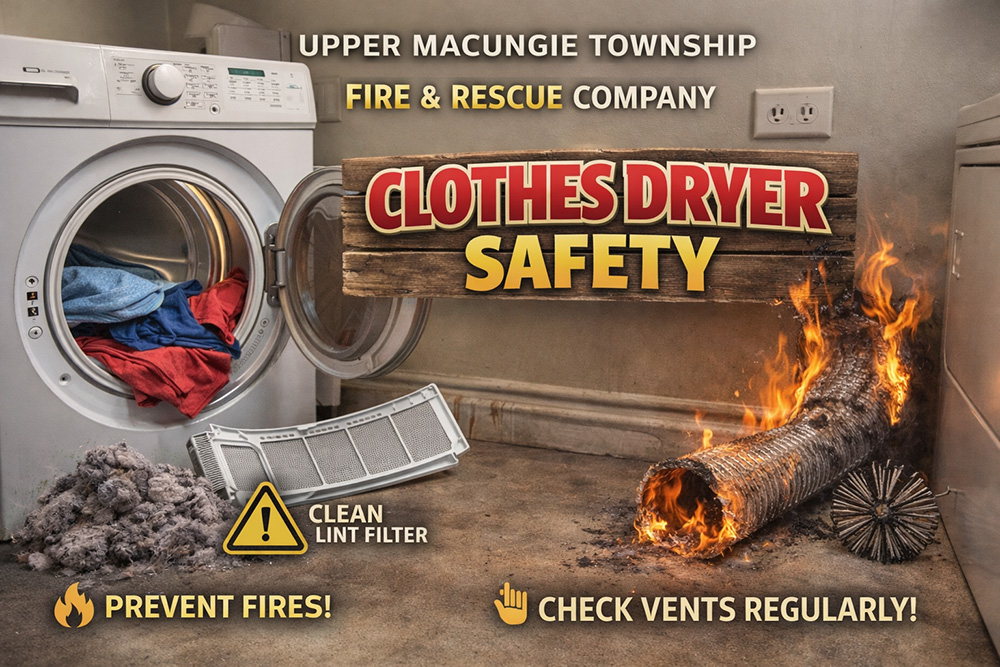
Clothes dryers are a common household appliance, but they also present a significant fire risk when not properly maintained. Safety professionals estimate that each year clothes dryers are associated with more than 15,000 fires, resulting in over 20 deaths and more than 370 injuries nationwide. The leading cause of these fires is the accumulation of lint in the dryer, vent, or exhaust duct. Lint is highly combustible. When it restricts airflow, heat can build up inside the dryer or vent system, increasing the potential for ignition. Fire Prevention TipsTo reduce the risk of dryer-related fires, follow these safety guidelines: Clean the Lint Screen After Every Load
Inspect and Clean the Vent System
Maintain the Area Around the Dryer
Use Proper Venting Materials
Exercise Caution with Contaminated ClothingClothing contaminated with volatile substances such as gasoline, cooking oils, cleaning agents, or finishing oils requires special care:
Community Risk Reduction MessageRoutine maintenance and awareness are the most effective tools for preventing dryer fires. Incorporating dryer safety into home fire safety education programs can significantly reduce preventable residential incidents. Departments are encouraged to include dryer maintenance tips in seasonal fire prevention campaigns and community outreach initiatives. For additional fire safety information or questions about residential fire prevention, contact your local fire department’s community risk reduction division. |