| Upcoming Events |
| There are currently no events |
| View All Events |
| 2026 Incidents | |
|---|---|
| Jan | 98 |
| Feb | 99 |
| Mar | 66 |
| Apr | 82 |
| May | 75 |
| Jun | 97 |
| Jul | 99 |
| Aug | 85 |
| Sep | 98 |
| Oct | 100 |
| Nov | 0 |
| Dec | 0 |
| Total | 899 |
| Web Counters | ||||||
|
|
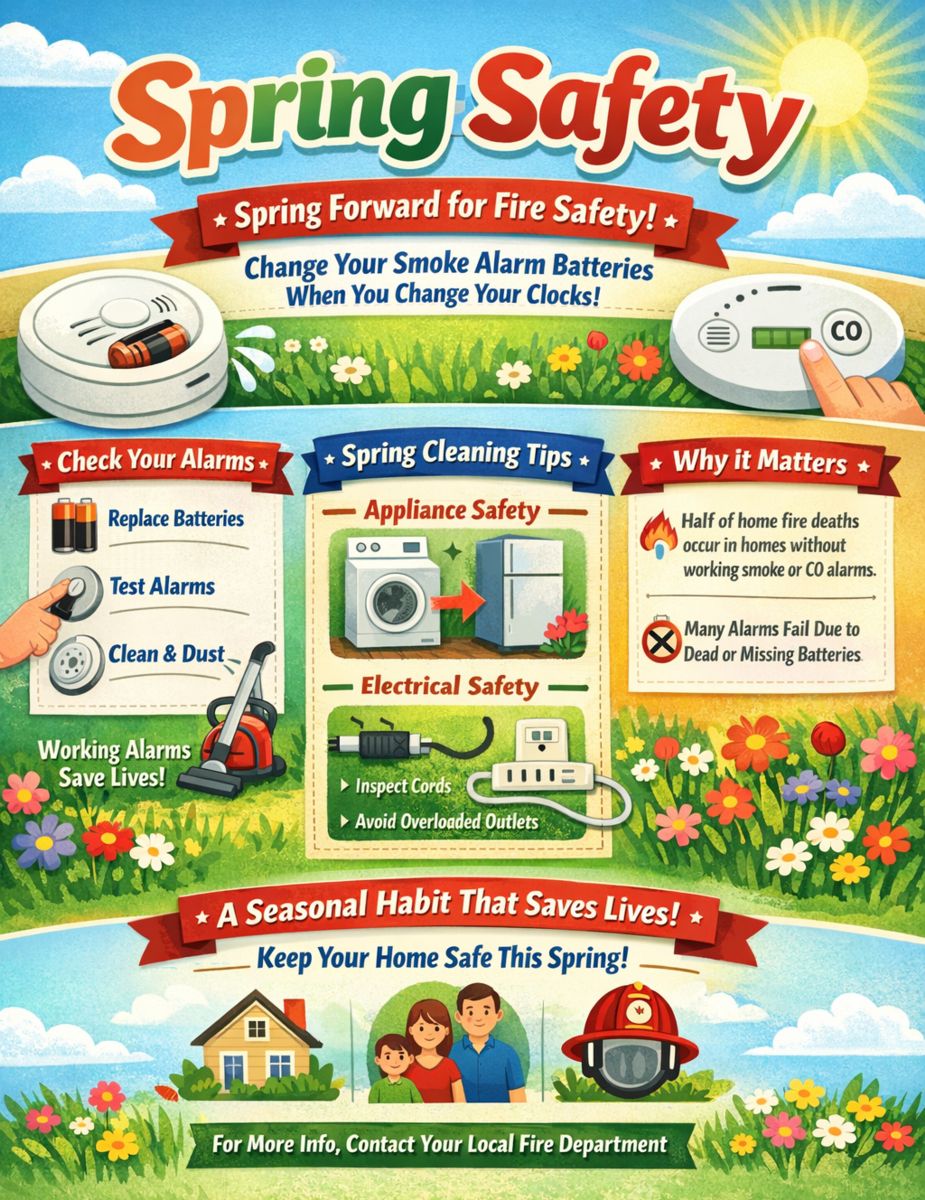
Change Your Smoke Alarm Batteries When You Change Your ClocksDaylight Saving Time is more than just setting clocks forward - it is an important reminder to check your home’s fire protection systems. Installing smoke and carbon monoxide (CO) alarms is essential, but installation alone is not enough. Twice each year, when you change your clocks, you should:
Establishing this habit every spring and fall can save lives. Why It Matters
While many alarms will chirp when batteries are low, residents should never rely solely on that warning. Proactive battery replacement every six months ensures reliable performance. After testing alarms, make sure every member of the household recognizes the alarm sound and knows to respond immediately. Spring Cleaning for Fire PreventionSpring is also the ideal time to reduce hidden fire hazards caused by dust, grease, and electrical wear. Small Appliances
Accumulated grease and debris can ignite under the right conditions. Large Appliances
Lint and dust buildup near appliances is a leading cause of preventable home fires. Electrical Cord Safety
Damaged or improperly placed cords can lead to electrical fires. A Seasonal Habit That Saves LivesSpring cleaning is about more than tidying up - it is about protecting your home and your family. By maintaining smoke and CO alarms, cleaning appliances, and inspecting electrical systems, you significantly reduce the risk of fire. Make fire safety part of your seasonal routine. A few simple steps taken today can prevent tragedy tomorrow. For additional fire prevention information or to schedule a community safety presentation, contact your local fire department’s Community Risk Reduction Division.
|