| Upcoming Events |
| There are currently no events |
| View All Events |
| 2026 Incidents | |
|---|---|
| Jan | 98 |
| Feb | 99 |
| Mar | 66 |
| Apr | 82 |
| May | 75 |
| Jun | 97 |
| Jul | 99 |
| Aug | 85 |
| Sep | 98 |
| Oct | 100 |
| Nov | 0 |
| Dec | 0 |
| Total | 899 |
| Web Counters | ||||||
|
|
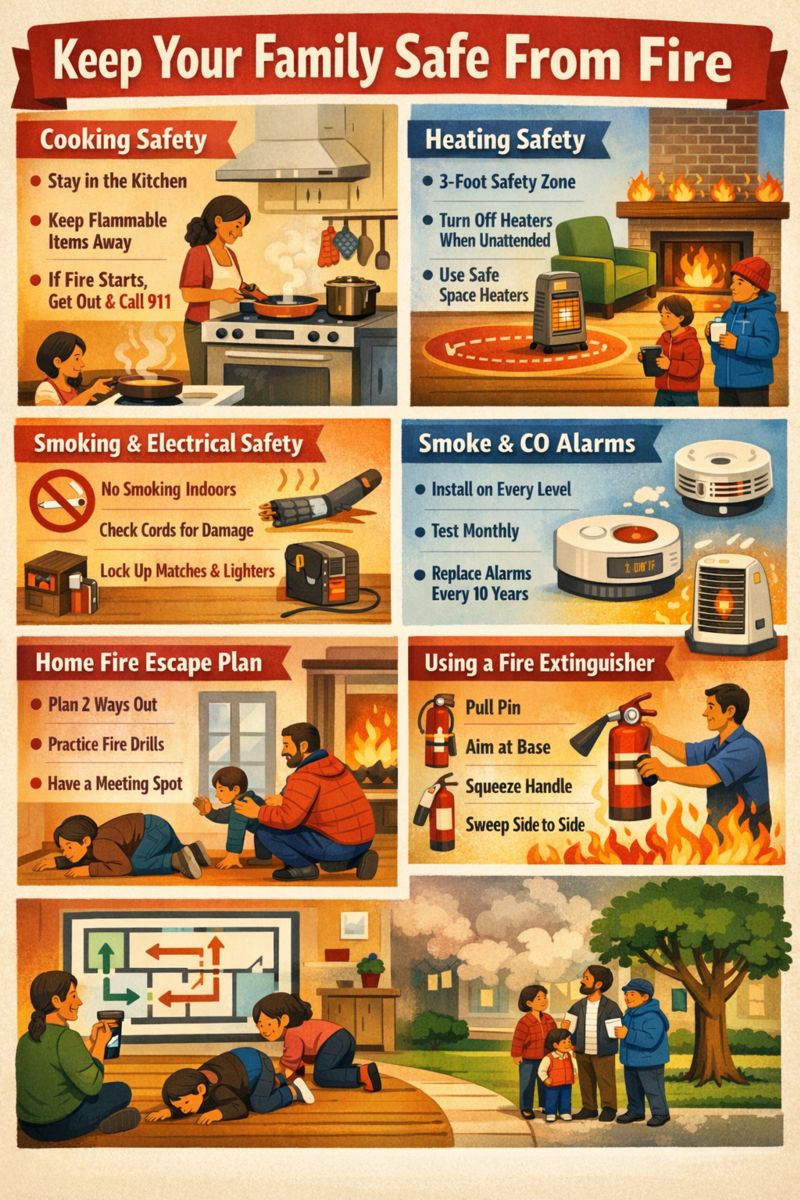
Keep Your Family Safe From Fire
Cooking and heating are the leading causes of home fires and fire-related injuries, with winter months representing the peak season for fire deaths. While fire fatalities in the United States have steadily declined over the past several decades, preventable fires continue to claim lives—particularly among children. According to the National Fire Protection Association, home fire deaths remain a serious public safety concern. Fire is a leading cause of death for children ages 1 to 14, and working smoke alarms and practiced escape plans significantly reduce the risk of injury and death. Prevention, preparation, and practice save lives. Cooking SafetyCooking is the number one cause of home fires. When preparing meals, make fire safety a priority:
If You Have a Cooking Fire
Heating SafetyHeating equipment is the second leading cause of home fires. Follow guidance from the American Red Cross:
Smoking, Electrical Safety, and CandlesOther common causes of home fires include smoking, electrical malfunctions, and candles. To reduce risk:
Working Smoke and Carbon Monoxide Alarms Are EssentialApproximately three out of five home fire deaths occur in homes without working smoke alarms. Early warning provides critical time to escape. The National Fire Protection Association recommends:
Make and Practice a Home Escape PlanA home fire is reported approximately every 88 seconds. Once a smoke alarm sounds, residents may have only one to two minutes to escape safely. Develop Your Plan
Practice Twice Each YearThe National Fire Protection Association reports that while many families have an escape plan, fewer have practiced it. Conduct drills during both daytime and nighttime conditions. During practice:
Regular practice builds confidence and ensures that every family member knows what to do. When and How to Use a Fire ExtinguisherYour safety is the top priority. If you are unsure about using a fire extinguisher, evacuate immediately and call 9-1-1. Before attempting to use an extinguisher:
For home use, the National Fire Protection Association recommends a multi-purpose (ABC-rated) fire extinguisher that is large enough to handle a small fire but manageable in weight. Remember PASS:
Review extinguisher instructions annually. In an emergency, there will be no time to read directions. Final MessageFire does not discriminate—but it is preventable. By prioritizing cooking safety, heating awareness, working smoke alarms, practiced escape plans, and proper extinguisher use, families can significantly reduce their risk. For additional fire safety education or to schedule a community presentation, contact your local fire department’s Community Risk Reduction Division. |