Facebook

Instagram

Upcoming Events

There are currently no events
View All Events

2026 Incidents
Jan 98
Feb 99
Mar 66
Apr 82
May 75
Jun 97
Jul 99
Aug 85
Sep 98
Oct 100
Nov 0
Dec 0
Total 899

Web Counters
Website Visitors
Since
February 25, 2026
58,461
Visitors Today
Nov 14, 2026
87


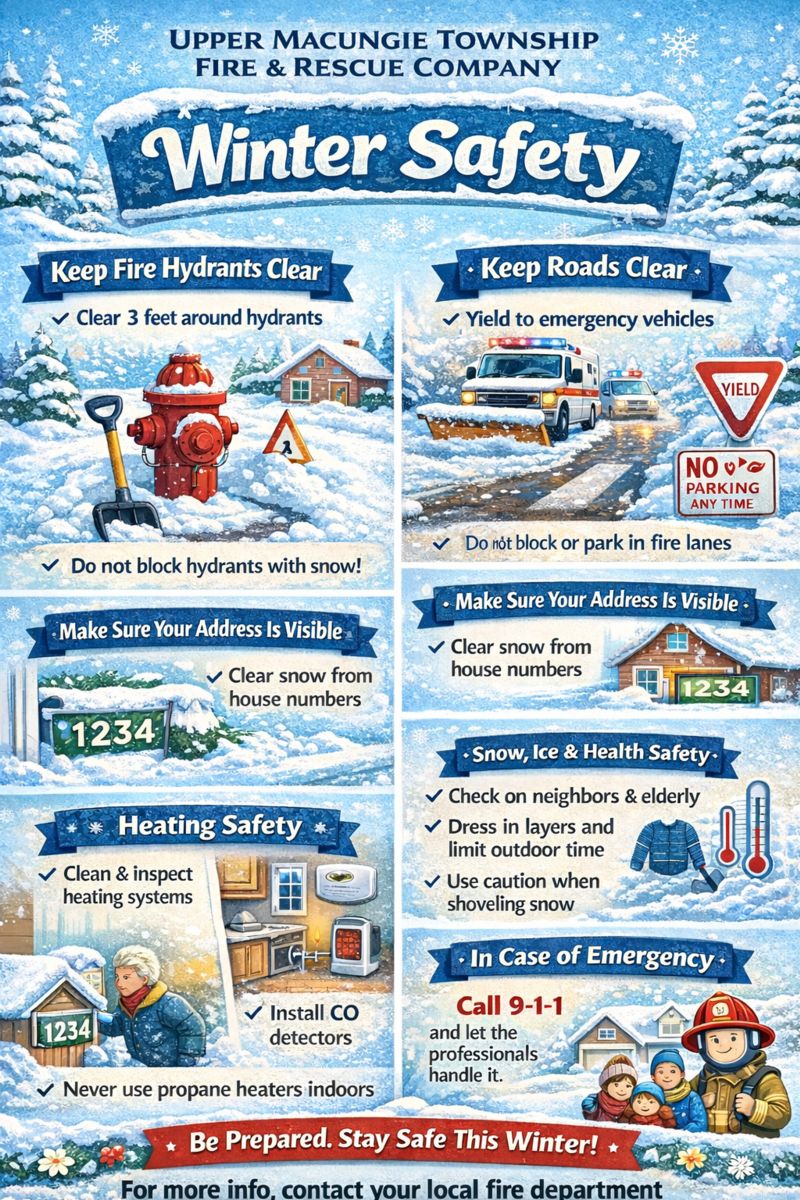
Winter weather presents unique fire and life safety challenges. Snow, ice, and freezing temperatures can interfere with emergency response, increase heating hazards, and put vulnerable populations at risk. Taking proactive steps can help prevent emergencies and protect your family during the coldest months of the year.

Keep Fire Hydrants Clear of Snow

An accessible and properly functioning fire hydrant is critical to firefighting operations.

  • Do not pile snow on or around fire hydrants.

  • During heavy snowfalls, consider “adopting” a nearby hydrant by clearing a three-foot area around it.

  • Clear a path from the hydrant to the street.

Quick hydrant access can significantly reduce response time during a fire emergency.

Keep Roads Clear for Emergency Vehicles

Operating fire apparatus and ambulances is challenging in winter weather.

  • Yield immediately to emergency vehicles responding to alarms.

  • Do not block snow emergency routes or key thoroughfares.

  • Avoid parking in fire lanes or designated fire zones.

  • Drive cautiously and allow extra stopping distance.

Clear access saves valuable seconds when lives are at stake.

Make Sure Your Address Is Visible

While clearing snow from driveways and walkways:

  • Remove snow from house numbers.

  • Ensure address markings are visible from the street, day and night.

Visible addresses help first responders locate you quickly during an emergency.

Heating System Safety

Heating equipment is a leading cause of home fires during winter months.

  • Have heating systems inspected annually before peak season.

  • Oil systems should be cleaned yearly and checked for leaks.

  • Gas systems must have tight connections and properly functioning pilot lights.

  • All repairs and maintenance should be performed by qualified professionals.

Remember: gas is explosive. Never attempt DIY gas repairs.

Space Heater Safety

  • Use space heaters only for limited periods.

  • Plug heaters directly into wall outlets—never into extension cords.

  • Keep at least three feet of clearance from combustible materials.

  • Never use heaters to dry clothing.

  • Unplug and allow heaters to cool before storing.

  • Provide ventilation if using unvented heating devices.

Chimneys and Flues

Chimneys and flues vent more than just fireplaces—they also serve heating systems.

  • Inspect annually for obstructions such as bird nests or debris.

  • Ensure vents and dampers operate properly.

  • Have chimneys professionally cleaned as needed.

Blocked chimneys can cause carbon monoxide to back up into the home.

Fireplace Safety

  • Open the flue before lighting a fire.

  • Use fire-resistant mats near fireplaces and stoves.

  • Never leave a fire unattended.

  • Do not burn trash or newspapers—they burn too hot and may ignite chimney fires.

  • Never use charcoal indoors. Charcoal produces deadly carbon monoxide.

Keep a small container of water nearby to extinguish stray embers safely.

Coal and Wood-Burning Stoves

  • Use only manufacturer-approved fuel.

  • Never use gasoline or flammable liquids to start a fire.

Improper ignition methods can cause explosions or dangerous flare-ups.

Smoke and Carbon Monoxide Alarms

  • Test smoke alarms monthly.

  • Check and replace batteries as needed.

  • Install carbon monoxide detectors on every level of your home.

Heating equipment increases the risk of carbon monoxide exposure during winter.

Personal Health and Cold Weather Safety

  • Check on elderly neighbors and vulnerable individuals.

  • Limit outdoor exposure during extreme cold.

  • Dress in layers with a windproof and waterproof outer layer.

  • Wear a hat—significant body heat is lost through the head.

  • Avoid alcohol before going outdoors.

  • Use caution when shoveling snow to prevent overexertion and cardiac events.

In Case of Emergency

If you have a fire involving a fireplace or heating device:

  • Do not attempt to fight a large fire yourself.

  • Get out of the house immediately.

  • Call 9-1-1 from a safe location.

If you smell gas or suspect a gas leak:

  • Leave the home immediately.

  • Do not operate electrical switches.

  • Call the fire department from outside.

Important: Never Use Propane Devices Indoors

Propane equipment is designed for outdoor use only and can cause fire or carbon monoxide poisoning if used inside a home.


Winter safety requires preparation, maintenance, and awareness. By following these guidelines, you can significantly reduce seasonal fire risks and protect your family throughout the winter months.

For additional winter safety information or to schedule a community safety presentation, contact your local fire department’s Community Risk Reduction Division.

Website Designed and Hosted By: Content Proudly Maintained By: Contact Info:
Firehouse Solutions
www.FirehouseSolutions.com
Upper Macungie Township Fire & Rescue Company
8330 Schantz Road
Breinigsville PA 18031
Emergency Dial 911
Non-Emergency: 610-841-5690
E-mail: info@umtfire.org
Copyright © 2026 Firehouse Solutions (A Service of Technology Reflections, Inc.)